


About Professor Virginia Kilborn
Professor Virginia Kilborn was appointed as Swinburne’s inaugural Chief Scientist in May 2021. She is a renowned radio astronomer who has led a highly successful career delivering research with impact within the local scientific community and on an international scale.
In what is believed to be the first appointment in an Australian university, Swinburne’s Chief Scientist provides leadership in science within and outside the University, driving scientific relationships and policy with government, industry and schools.
Aligned with Swinburne’s Horizon 2025 Strategic Plan where people and technology work together for a better world, Professor Kilborn is dedicated to fostering transformative science that creates genuine social and economic impact.
Key focus areas
Science research
Science education
Science policy and development
Science equity and diversity
-

“There has never been a more important time to be involved in science. As we step into the critical challenges of our nation and the world, the scientific voice must be more present.
I am proud to represent that voice and continue to spearhead the great work that fellow scientists are performing at Swinburne and more broadly.”
Professor Virginia Kilborn , Swinburne's Chief Scientist

Representing the scientific voice
After joining Swinburne’s Centre for Astrophysics and Supercomputing in 2003, Professor Kilborn has taught undergraduate and postgraduate astronomy and held multiple leadership roles as Chair of the Department of Physics and Astronomy, Dean of Science, and now as Swinburne’s inaugural Chief Scientist.
Leveraging her extensive astrophysics knowledge and proven leadership experience, Virginia has strategically worked to further education, research, policy and equity at Swinburne and throughout the scientific research community.
Professor Kilborn is an active member of the Australian Astronomical community, a past President of the Astronomical Society of Australia, and current Chair of the National Committee for Astronomy (NCA) with the Academy of Science.
She is also playing a leading role in advancing Swinburne’s science and technology focus and helping guide our learners, educators, and industry partners on the path to a digital, tech-rich future.
Swinburne's space technology capabilities
Learn more about space technology at Swinburne and how we are paving the way by combining our globally renowned capabilities in astrophysics, aerospace, aviation, engineering, advanced manufacturing, and digital technologies.
-
Swinburne Quantum
We are harnessing our deep and diverse expertise in quantum science, technology, and adjacent fields to help shape the next generation of quantum-enabled industry.
Science news
-
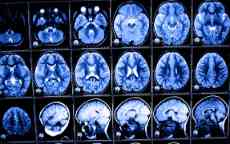
Music therapy could help protect cognitive function in people living with dementia
- Science
Swinburne research explores how music therapy could support brain function, memory and cognition in people living with dementia and help delay its onset.Tuesday 10 November 2026 -
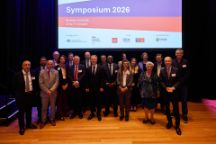
Four new projects announced at the 2026 FACET Symposium in Sydney
- Science
- University
- Sustainability
- Engineering
The 2026 Franco-Australian Indo-Pacific Centre for Energy Transition (FACET) Symposium held in Sydney brought together experts, researchers and industry leaders for an event that discussed building resilient infrastructure, next generation power systems and integrated energy solutions.
Tuesday 27 October 2026 -
Swinburne secures funding to strengthen Australia's future energy networks

Swinburne has secured $2.2 million in funding as a leading university partner for a project to develop next-generation quantum timing technology for Australia's energy networks.
Friday 23 October 2026 -
Swinburne researchers contribute to nearly $20 million in ARC-funded projects

- Design
- Technology
- Science
- University
- Sustainability
- Engineering
Swinburne researchers are contributing to four successful projects in the latest Australian Research Council (ARC) Industrial Transformation Research Program, representing nearly $20 million in combined project funding.
Tuesday 20 October 2026 -
Swinburne’s research quality rises in global rankings

- Technology
- Education
- Science
- University
Swinburne has placed 294th globally in the 2027 Times Higher Education World University Rankings
Wednesday 30 September 2026 -
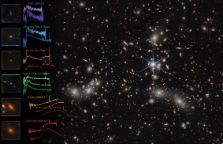
Swinburne JWST collaboration to receive prestigious 2027 Berkeley Prize from American Astronomical Society
- Astronomy
- Science
- University
Swinburne leads the international team who have been awarded the American Astronomical Society’s 2027 Lancelot M. Berkeley Prize for the UNCOVER project
Friday 18 September 2026


Explore science with Swinburne's Chief Scientist
For any strategic science-related advice, expert commentary or public engagement requests, please contact Professor Virginia Kilborn at vkilborn@swinburne.edu.au.