

Swinburne’s Mobile Innovation Lab hits the road

Swinburne’s Mobile Innovation Lab is a state-of-the-art facility on wheels.
In summary
Swinburne’s Mobile Innovation Lab is a cutting-edge mobile facility designed for research, industry collaboration, STEM education, training and outreach
The Mobile Innovation Lab will be continually upgraded with equipment such as 3D printers, welding simulators, material testing machines, cybersecurity protection protocols, thermal imaging systems and more
The Mobile Innovation Lab can also function as a mobile command-and-control centre for disaster relief operations
The Mobile Innovation Lab is a state-of-the-art facility on wheels, created to support research, industry partnerships, STEM education, workforce training and community outreach. This advanced mobile lab is actively supporting several key areas, including technology demonstration with autonomous systems, drones, driving simulators, tele-operated medical robots, as well as industry collaboration and STEM education, training and outreach.
“With the launch of our Mobile Innovation Lab, we’re hitting the road to accelerate innovation, driving cutting-edge research and development directly to all communities. This vehicle initiative allows our team to rapidly prototype and test new technologies in real-world environments,” says Professor Karen Hapgood, Deputy Vice-Chancellor of Research.
“Our Mobile Innovation Lab is not just a mobile technology demonstration and STEM outreach platform; it can also function as a mobile command-and-control centre, simultaneously coordinating teams of ground robots and aerial drones that use LiDAR, cameras, and other sensing devices to capture environmental data,” says Distinguished Professor Saeid Nahavandi, Associate Deputy Vice-Chancellor of Research.
“The data streams are processed in real-time by an onboard, secure GPU server to create dynamic digital twins. AI models then analyse these virtual models to provide critical, actionable intelligence, empowering humans inside the command centre on the ground to make informed, risk-aware decisions. This end-to-end, real-time capability is a game-changer for critical missions such as humanitarian aid and disaster relief operations.”
Technology demonstration
The Mobile Innovation Lab hosts advanced driving simulators, cybersecurity protection protocols, VR/AR devices, and computer vision and sensor fusion technologies developed by Swinburne researchers. Researchers will demonstrate the latest advancements in technology, providing a glimpse into the future of innovation with potential applications across various industries including transportation, logistics, and security and surveillance.
Autonomous systems
The Mobile Innovation Lab enables testing and evaluation of autonomous mobile robots, drones, and tele-operated robotic systems for emergency medicine. As a mobile command-and-control centre, the lab is designed for real-time information acquisition, coordinated system control, and enhanced situational awareness for human operators in remote sites. These capabilities have direct applications in humanitarian missions and disaster response.
Industry collaboration
The Mobile Innovation Lab serves as a cutting-edge testing ground where new technologies and ideas are developed and refined before being rolled out more broadly. Equipped with industry-leading technologies, the lab encourages collaboration between researchers and industry partners to accelerate innovation.
Some of the technologies in the Mobile Innovation Lab include a Racelogic VBOX, UR-series robots and grippers, radar systems from Delphi, LiDAR systems from Ouster, optical systems from AVT, robotic and haptic controllers from 3D Systems, camera systems from Stereolabs and Uncrewed Autonomous Vehicle (UAV)from Freedspace.
STEM education, training and outreach
The Mobile Innovation Lab engages students and the workforce with hands-on demonstrations of emerging technologies, offering an interactive learning experience that inspires interest in STEM. By providing direct exposure to cutting-edge systems , the lab helps prepare participants for careers in fast-growing, technology-driven industries.

The Mobile Innovation Lab will be continuously upgraded with equipment including 3D printers, welding simulators, material testing machines, thermal imaging systems, hologram screens, and medical technology like fNIRS technology. These enhancements will further expand capabilities and ensure that the facility remains at cutting edge of technology innovation.
-
Media Enquiries
Media Enquiries
Related articles
-
Swinburne spinout to cut AI’s energy demands with breakthrough chip

- Technology
A new Swinburne spinout is tackling one of AI’s biggest infrastructure challenges: moving more information through data centres while using less energy.
Friday 30 October 2026 -
50 years of psychology at Swinburne: celebrating the people behind the science

- Education
- Science
- University
Swinburne’s Department of Psychological Sciences celebrates its 50th anniversary in 2026, reflecting on five decades of psychology education, research and professional training.
Wednesday 11 November 2026 -
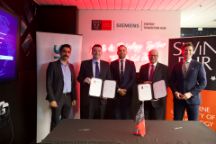
Swinburne and Siemens expand energy industry training across the Asia-Pacific
- Engineering
Swinburne University of Technology and Siemens are helping the transition to cleaner, safer and more reliable electricity across the Asia-Pacific region through a new practical, localised training initiative.
Tuesday 10 November 2026 -
Music therapy could help protect cognitive function in people living with dementia
- Science
Swinburne research explores how music therapy could support brain function, memory and cognition in people living with dementia and help delay its onset.Tuesday 10 November 2026 -
Landmark reform of Australian university leadership

- University
Australian university Chancellors and Vice-Chancellors will come together within a single national representative body.
Friday 06 November 2026


