

Swinburne is committed to taking the necessary steps to identify and resolve any form of modern slavery within the University’s operations, our suppliers and partner organisations. We deplore all forms of slavery and forced labour, and we understand the significant role of universities in helping to end modern slavery.
Swinburne's Modern Slavery Statement outlines our commitments and steps taken to resolve any forms of modern slavery within our operations, suppliers and partner organisations.
We are participating in the university sector’s modern slavery program which aims to work collaboratively with our suppliers and peers in the sector to address modern slavery across our supply chains. Our Modern Slavery Statement is also published on the Australian Border Force’s online register.
Our 2026 Modern Slavery Statement is awaiting approval
The information on this page is related to Swinburne's 2026 Modern Slavery Statement. Please note that this has not yet been approved by the Attorney-General's Department or published on the Modern Slavery Statements Register.
Understanding our modern slavery risks
Swinburne recognises and supports that freedom from slavery is a fundamental human right. Swinburne relies on the Australian Modern Slavery Act’s definition of modern slavery which includes eight types of serious exploitation:
- trafficking in persons
- slavery
- servitude
- deceptive recruiting for labour/services
- forced marriage
- forced labour
- debt bondage
- the worst forms of child labour
The worst forms of child labour mean situations where children are subjected to slavery or similar practices or engaged in hazardous work.
We support the UN Guiding Principles on Business and Human Rights (UN Principles), which are the recognised global standard for preventing and addressing business-related human rights harm. We recognise our moral obligation to respect human rights and as per the UN Principles we will take action to prevent, mitigate and, where appropriate, remedy modern slavery across our operations, supply chains and in our investments.
Swinburne’s total student headcount in 2025 was 43,906 across higher education and 25,303 across vocational education. At the end of 2025, Swinburne had more than 2,800 employees (2,505 full-time equivalent), comprising full-time, part-time and fixed term and casual staff.
Most Swinburne employees have their terms and conditions of employment defined in one of the university’s enterprise agreements. Staff are represented in the enterprise bargaining process by the National Tertiary Education Union (NTEU) and Australian Education Union (AEU) or can self-represent. Not all employees of the university choose to
be a member of a union and membership is not compulsory. Australian-based employees who are not covered by an enterprise agreement are covered by modern awards. Swinburne supports freedom of association and employee representation and continues to have positive and regular interactions and communications with the relevant unions.
Swinburne is compliant with local labour laws and regulations. We do not impose any penalties or other negative consequences on employees wishing to cease their employment. Employees leave their jobs without barriers or fear of consequences. On the rare occasions that we need to source labour from outside Australia (particularly to provide services within those geographies), we do so in a way that is compliant with the local labour laws and regulations and, to the extent appropriate, provide comparable terms and conditions to Swinburne’s Australian employees.
We have policies and procedures in place to ensure a safe, equitable and supportive working environment for our staff and students. Swinburne’s People, Culture and Integrity
Policy sets out Swinburne’s commitment to building a positive culture, promoting integrity, and supporting university members, community and industry partners. Ethical conduct is expected, encouraged, and supported with no tolerance for corrupt conduct, fraudulent activities, and maladministration. The policy requires that responsible persons must be free from a conflict of interest, bias and inappropriate influence when making decisions and dealing with other persons or organisations on behalf of the university. These policies are supported by the Complaints, Reviews, Appeals and Misconduct Framework for students and staff.
The University has also aligned its policies, procedures and reporting mechanisms with recent reforms relating to gender based violence, including sexual harassment and sexual misconduct, to ensure appropriate prevention, response and support arrangements are in place. Ethical conduct is expected, encouraged and supported, with no tolerance for corrupt conduct, fraud, maladministration, discrimination, harassment or violence.
Swinburne is committed to providing an environment for work and study that is free from bullying, violence, sexual harassment and assault, discrimination, and harassment and vilification. Swinburne is also committed to the safety of children and has zero tolerance for child abuse.
Swinburne’s position on improper conduct (including fraud and corruption, criminal offences, substantial risk to the health and safety of a person) is guided by the principles of:
- upholding the highest standards of legal, ethical, and moral behaviour;
- ensuring the organisational culture and embedded risk controls effectively deter improper conduct;
- building willingness to report wrongdoing;
- ensuring compliance with public interest disclosure or whistle-blower legislation (including the Public Interest Disclosure Act and the Corporations Act);
- protections for individuals who disclose improper conduct; and
- natural justice.
Swinburne takes reports of illegal or improper activity seriously and is committed to conducting its activities with integrity. Swinburne uses an independent disclosure service (called Stopline) for employees and third parties to report suspected or actual illegal or improper activity. Concerns can also be raised directly with the University’s Disclosure Officer (currently the General Counsel) and disclosers may disclose anonymously if they wish. Information outlining how to access this service and the process for managing claims is found within Swinburne’s Improper Conduct and Whistleblowing Guidelines.
Swinburne researchers are committed to the highest ethical, professional, and scholarly standards. Our research adheres to the Australian Code for the Responsible Conduct of Research. We are committed to ensuring that all research is conducted responsibly with honesty, integrity and respect for human research participants, animals, and the environment. Research may be undertaken in partnership with a variety of Australian and international external parties that may include start-ups, small to medium enterprises, not-for-profit enterprises, multinationals, and government bodies. Due diligence is carried out on potential research partners to assess ethical and sustainable business practices that align with Swinburne’s own integrity standards. Foreign interference legislative requirements are adhered to, supported by assessment and reporting processes.
Employee concerns in relation to any of the above operational risks can also be registered with People & Culture via SwinHelp or SwinRisk, two newly introduced software platforms that assist and support the University and its employees.
Through its investments in public and private companies, Swinburne can influence environmental and social outcomes. We seek to use this influence to support positive change, guided by our Responsible Investment Charter, which focuses on climate change, human rights and modern slavery, and sustainable development.
Swinburne requires its investment manager (currently Mercer) to conduct an annual review of portfolio performance against the Responsible Investment Charter and recognised best practices. The 2025 review confirmed that the portfolio continues to comply with all Charter commitments and performs strongly across key ESG measures. Swinburne was rated A+ in Mercer’s Responsible Investment Evaluation, an improvement on the 2024 result, and ranked well within the upper quartile of its global peer group, which includes the university and education sector.
The review also confirmed that the portfolio has no exposure to companies associated with high severity modern slavery incidents, aligned with UN Global Compact principles on forced and child labour. Mercer reports at least annually to Swinburne’s Audit and Risk Committee and Council on assessments undertaken to confirm this position.
Swinburne conducts a yearly analysis on its procurement spend to assess the risks of modern slavery across our supply chain. The risk assessment for 2025 spend is based on outputs from the ArcBlue (part of Bain & Company) modern slavery tool. This tool determines risk exposure using different sources (e.g. 2023 Global Slavery Index, RESPECT Responsible and Ethical Private Sector Coalition Against Trafficking, NSW Anti-Slavery Commissioner Guidance on Reasonable Steps etc.) and produces a risk level assessment at a country, spend category (i.e. broadly aligned to industries), and supplier level.
Insights from the tool highlight that in 2025 Swinburne procured from 79 spend categories (1,245 suppliers) that contain an inherent high risk of modern slavery, influenced by factors such as complex global goods supply chains and low skill labour workforces (refer Table 1). The level of risk assigned to each category presents a view on the level of risk for that industry’s supply chain, rather than the risk of the direct supplier alone.
| Risk categories | Percentage |
|---|---|
| High risk | 48% |
| Medium risk | 34% |
| Low risk | 18% |
Key categories of the university’s spend that contain an inherent high risk of modern slavery are listed in Table 2.
| Goods | Services |
|---|---|
Peripheral equipment Equipment (scientific, engineering, telecommunications, AV, medical, electronics) IT network infrastructure Stationery and kitchen supplies Laboratory supplies Merchandise and apparel, including uniforms and PPE Mobile devices and accessories |
Commercial cleaning and hygiene services Security Construction Catering Hotels and motels International student recruitment Software Licences |
Swinburne procures a limited proportion of goods and services directly from overseas suppliers, representing 23.58 per cent of the University's total supplier base. Of these, 120 suppliers located across parts of Asia, South America and Africa are assessed as presenting a higher inherent risk of modern slavery, reflecting the elevated prevalence of modern slavery and human trafficking in parts of those regions. These suppliers represent 3.72 per cent of Swinburne's total supplier base, as outlined in Table 4.
Consistent with Swinburne's focus on local procurement, expenditure with suppliers based in higher risk locations outside Australia is limited and is primarily associated with student (international) recruitment services and specific educational support services
The map (Graph 1) outlines Swinburne’s suppliers in 2025 by country in relation to the prevalence of modern slavery risks as per the ArcBlue tool.

| High-risk country | Number of suppliers |
|---|---|
| India | 51 |
| Sri Lanka | 9 |
| Pakistan | 7 |
| Bangladesh | 7 |
| Cambodia | 4 |
| South Africa | 3 |
| Saudi Arabia | 3 |
| Philippines | 2 |
| Lao PDR | 2 |
| Colombia | 2 |
| Uganda | 1 |
| Timor-Leste | 1 |
Bringing together the two inherent risk assessments of Spend Category and Country into one overall risk score, Swinburne’s modern slavery tool identifies 23 unique suppliers (1% of total suppliers) who are identified as being of a very high risk of modern slavey and 1,129 unique suppliers (31% of total suppliers) who are identified as being of a high risk of modern slavery (refer Table 4). Whilst these results are in line with educational organisations of our size, we continue to work with fellow universities, the AUPN and our suppliers to reduce our overall modern slavery risk.
The spend categories and countries identified as high risk are the subject of Swinburne’s detailed analysis that is conducted during strategic procurement tenders and specific category reviews. Many of the spend areas require a deeper analysis of suppliers, taking into account their complex global supply chains, as opposed to purely focusing on the individual supplier that Swinburne transacts directly with. Strategic procurement projects delivered across Swinburne in 2024 considered and addressed inherent modern slavery risks for the relevant category and/or country.
While we continue to assess and address the overall modern slavery risk across our operations, investments and research activities, our supply chain remained our primary focus of action in 2024, given that this is the area where the potential risks of modern slavery occurrences are most prevalent.
| Risk level | Number of suppliers | Percentage of suppliers |
|---|---|---|
| Very-high risk | 23 | 1% |
| High risk | 1,129 | 31% |
| Medium risk | 176 | 5% |
| Low risk | 2,259 | 63% |
-
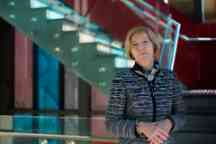
"Freedom from slavery is a fundamental human right. Swinburne condemns all forms of modern slavery and forced labour and recognises the important role universities play in helping prevent and address modern slavery. "
Professor Pascale Quester , Vice Chancellor and President

Our actions to assess and address risks of modern slavery
Swinburne recognises its responsibility to take reasonable steps to prevent, mitigate and, where appropriate, address modern slavery risks across its operations. We also work collaboratively with our direct and indirect suppliers to address modern slavery risks within our supply chains.
Swinburne continues to contribute to sector wide responses, including participation in the Australian Universities Procurement Network (AUPN) Anti Slavery Program.
Raising the awareness and understanding of modern slavery
As an educational institution, Swinburne recognises the importance of building awareness and capability among staff and students in relation to modern slavery as a critical human rights issue.
During 2025, Swinburne continued to deliver modern slavery awareness sessions to senior stakeholders, staff and students through procurement briefings and new starter induction programs. These sessions focus on the nature and prevalence of modern slavery, Swinburne’s approach to risk management, and the role individuals play in identifying and escalating potential risks.
All members of the Procurement team continued to complete targeted modern slavery training during 2025, strengthening capability to identify, assess and respond to risks across Swinburne’s supply chain. Representatives from Procurement, Legal, Risk and Governance, Research and other operational teams remain engaged to support a coordinated, whole of University approach.
Swinburne's supplier due diligence
To mitigate modern slavery risks within key goods and services contracts, Swinburne undertakes a range of due diligence activities, including:
- issuing targeted questionnaires to selected suppliers to assess risks and actions taken;
- requiring suppliers to demonstrate relevant policies, processes and systems during tender evaluations;
- undertaking periodic assessments of wages paid at market rates, including review of employee payslips where appropriate; and
- incorporating contractual obligations specific to reducing labour exploitation and modern slavery.
During 2025, Swinburne continued to utilise the ArcBlue supply chain transparency and modern slavery risk tool (part of Bain & Company), in collaboration with the university sector. This tool supports improved supply chain visibility, structured due diligence and the monitoring of effectiveness indicators. Due diligence undertaken during tender processes continued to highlight varying levels of supplier maturity, with further information often required to better understand and manage risks.
To supplement this approach, Swinburne continued to monitor relevant media alerts relating to suppliers, countries and industries associated with higher modern slavery risks.
In 2025, deeper modern slavery reviews were undertaken across selected high risk categories to further strengthen understanding and controls.
Swinburne continued to participate in and benefit from the Australian Universities Procurement Network (AUPN) Anti Slavery Program during 2025, with a focus on embedding and consolidating initiatives established in prior years. The program delivered several key initiatives in 2025.
Swinburne’s procurement framework
Swinburne’s procurement framework is designed to support sustainability and improved social outcomes, including the prevention of modern slavery. The University adopts a holistic approach to value for money, balancing environmental and social considerations alongside quality, timeliness and cost.
Swinburne avoids unrealistic delivery timeframes and does not pursue lowest cost outcomes where this may increase the risk of labour exploitation or other adverse impacts. The procurement framework comprises policies, procedures, guidance materials, templates and tools that seek to deliver both commercial and social value across procurement activities.
Throughout 2025, Swinburne continued to embed the framework through University wide communications, presentations and training. Due diligence measures are incorporated into procurement processes to assess modern slavery risks associated with new engagements and the existing supplier base. Procurement activities assessed as presenting a higher modern slavery risk are escalated to the Procurement team, with project planning, evaluation and decision making stages incorporating specific consideration of modern slavery risks. Where relevant, a modern slavery risk questionnaire is included in tender processes.
Swinburne's contract terms
Swinburne’s standard contract templates include clauses addressing modern slavery risks. These clauses require suppliers to investigate modern slavery risks within their operations and supply chains, take appropriate due diligence and remediation actions, and maintain relevant systems and controls.
Suppliers are also required to apply equivalent obligations to their own suppliers, supporting Swinburne’s objective of promoting positive impacts beyond its direct contractual relationships. These clauses are applied to all new contracts and to existing supplier contracts as they are renewed.
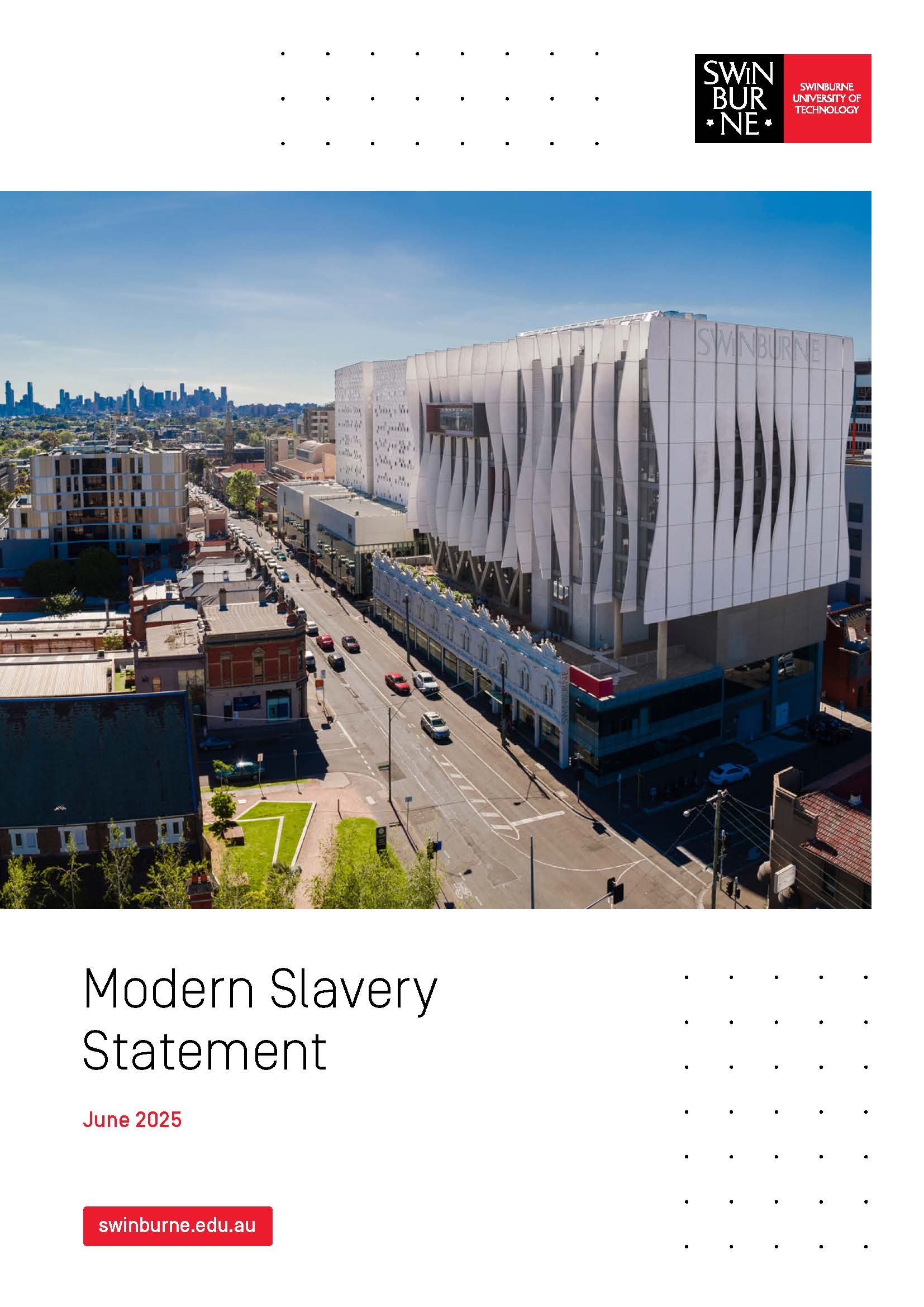
Modern Slavery Statement
Collaboration as a university sector
Swinburne continued to participate in and benefit from the Australian Universities Procurement Network (AUPN) Anti-Slavery Program during 2025. Through this sector-wide collaboration, universities work together to improve supply chain transparency, strengthen due diligence practices, share insights and address modern slavery risks. The program delivered several key initiatives in 2025.
The AUPN Academic Advisory Board, established in 2020 and refreshed in 2022, continued to support the sector during 2025. The Board comprises ten academics from seven universities with expertise in modern slavery and related human rights issues.
The Board provides insight and specialist guidance to support universities in understanding modern slavery risks and appropriate responses across different operational contexts. Key insights and recommendations continued to be shared across the sector through AUPN communications and guidance materials.
Swinburne continued to utilise ArcBlue’s (part of Bain & Company) modern slavery risk assessment tool during 2025, alongside most Australian universities. The tool draws on multiple external data sources, including the Global Slavery Index and guidance from relevant anti slavery bodies, to assess inherent modern slavery risk across supplier countries, spend categories and individual suppliers.
The aggregated data within the tool reflects the scale and complexity of combined university supply chains and supports sector wide visibility of shared suppliers. During 2025, Swinburne continued to use the tool to inform procurement due diligence, supplier engagement and prioritisation of higher risk categories.
Throughout 2025, Swinburne continued to leverage templates and guidance materials developed through the AUPN Anti Slavery Program. These resources include supplier risk questionnaires, contract clauses, supplier code of conduct guidance, and materials addressing grievance mechanisms, remediation and modern slavery reporting.
The guidance supports a consistent and practical approach across the sector and extends beyond procurement processes to address broader considerations relating to grievance mechanisms and remediation within a university context.
One of Swinburne’s key objectives is to raise awareness, educate and stimulate action across the university sector, external stakeholders, and suppliers.
The monthly University Anti-Slavery Forum continued to build momentum during 2025, showcasing a suite of external speakers, survivor advocates, and procurement professionals to discuss topics such as ethical apparel procurement and risk identification tools, sharing insights and learnings on important topics related to modern slavery. Procurement and other university staff attended each of the 9 sessions throughout the year, representing 41 Australian and New Zealand universities. Speakers included representatives from Etiko, Fair Supply, Electronics Watch and Survivor Connections. Meetings also discussed progress on key initiatives, updates on action addressing key risks, and invited suggestions for collaboration. Minutes and key resources were disseminated across teams and made available through the AUPN portal.
The program engaged externally during 2025 to gather insights from other sectors and collaboration programs as well as raise awareness of the AUPN program. Groups engaged include Migrant Justice Institute, Anti-Slavery Australia, and ACRATH (Australian Catholic Religious Against the Trafficking of Humans).
Measuring our effectiveness
The influence and purpose retained by universities in society create an opportunity for Swinburne to take a leadership role, together with the wider university sector, in addressing Modern Slavery risks and actual instances.
Swinburne recognises that our approach to this critical issue will continue to evolve over time and that measuring our effectiveness is essential to prioritise our efforts for the periods ahead.
We will measure our effectiveness through:
- ongoing contribution into reviews of Swinburne’s risk assessment framework and processes to ensure appropriate and up-to-date consideration of human rights abuses across our operations and supply chains
- periodic reviews of the risk profile of Swinburne’s existing supplier base with particular attention devoted to the progress made to reduce supplier risk profiles through action and review (for example, responses to questionnaires); and
- monitoring of progress against Swinburne modern slavery key performance indicators.
| Key Performance Indicators |
2025 Outcomes |
|---|---|
| Swinburne staff and students made aware of the modern slavery issue through communications and training | Swinburne staff (key purchasers/procurers) completed training on Swinburne's procurement framework which includes modern slavery information and guidance |
| Swinburne supplier contracts that include modern slavery clauses | At least 40 strategic procurement tenders across equipment and service engagements have included a review of supplier modern slavery policies, prevention actions, and labour law compliance. This includes tenders for Safety & Risk, Electricity, Building refurbishments, Asset maintenance, Management services, Recruitment Panel, etc. |
| Swinburne supplier engagement reviews (for example, tenders) that have incorporated an assessment of modern slavery risks in the supplier's operations and supply chain | At least 50 new services agreements/agreement variations including modern slavery clauses were agreed and executed |
| High-risk suppliers engaged in response to risk alerts or undertaking proactive reviews | Five deep modern slavery assessments were undertaken across services and merchandise categories, including executing detailed engagements with suppliers |
| Year-on-year reduction in the proportion of suppliers indicated as being of a higher risk of modern slavery | The University continues to make progress in reducing the level of very high and high risk of modern slavery |
Priorities for the future
In 2026, Swinburne’s priorities focus on consolidating existing practices, strengthening capability and continuing to embed modern slavery considerations into core procurement and governance processes.
Key priorities include:
- continuing to build capability across Procurement, Sustainability and relevant operational teams to identify modern slavery risks and assess supplier maturity within strategic procurement activities, alongside broader ESG considerations;
- embedding the use of analytics and insights generated through the ArcBlue modern slavery tool within procurement processes, including informing tender evaluations and deeper assessments of higher risk spend categories;
- progressively engaging suppliers to participate in modern slavery due diligence activities, including completion of modern slavery questionnaires in selected higher risk categories;
- continuing collaboration with the university sector through the AUPN Modern Slavery Program to address shared risks, emerging issues and good practice; and
- maintaining awareness raising and capability building activities across the University through targeted communications, briefings and training.
These priorities reflect a focus on embedding and refining existing controls, rather than introducing new frameworks or tools.
Get in contact
If you’d like to know more about our commitment to address and diminish Modern Slavery, please contact us at sustainability@swinburne.edu.au.